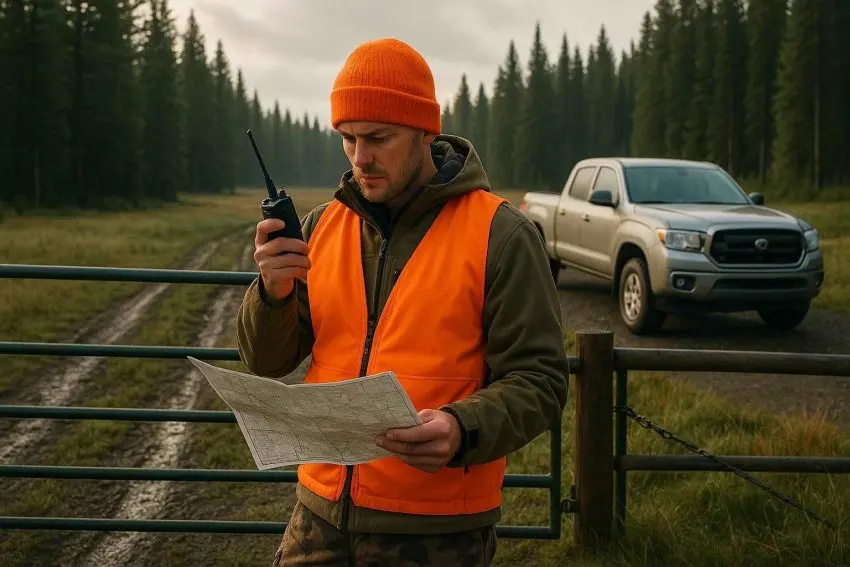
At 5:10 a.m., a member reaches the gate and finds another vehicle parked across the usual access lane. The owner is already in the woods, no one knows which stand is occupied, and a routine hunt has become a safety problem. Responsible participation prevents this confusion. For a new member, the essential decisions are how to communicate, where and when to travel, which rules to confirm, and how to leave the property in good condition.
Learn the club's working rules before your first hunt
A membership agreement may cover more than harvest limits. Review expectations for guest access, vehicles, parking, stand construction, bait, scouting, camping, gates, dogs, alcohol and reporting. If a rule is unclear, ask before entering instead of relying on what another hunter did last season.
Distinguish permission from good judgment. Being allowed to hunt a tract does not make every route, time or setup appropriate. A narrow trail may serve several people, a field edge may be needed for agricultural work, and a closed gate may indicate a temporary restriction rather than an invitation to go around it.
Keep a current copy of the club's written guidance, including emergency contacts and any member map. Rules may change with land conditions, lease arrangements or wildlife-management priorities. Treat verbal advice as useful context, not a substitute for current club policy.
Build an access plan that other members can understand
Access planning is a shared safety practice, not just a personal convenience. Before a hunt, identify your parking point, walking route, expected return time and areas to avoid. Complete any sign-in system accurately. If members coordinate through a group message or calendar, provide the information the club expects without sharing unnecessary detail.
A clear plan answers four questions: Where will the vehicle be parked? Which route will be used? Which hunting area is occupied? When should the member check out? It need not be elaborate; another person should be able to make a safe decision without guessing.
Use reservations when several members share limited stands or small parcels. Informal check-ins may work on larger ground with fewer overlapping visits, provided members respond reliably. The common mistake is using an informal system in a crowded area and assuming silence means the property is empty.
Do not block gates, park in tall grass during dry conditions or drive across fields without permission. Use established roads where possible, account for weather-related changes and close gates as directed. If a route becomes muddy, rutted or unsafe, report it rather than creating a new track.
Make safety visible, not assumed
Safe conduct starts before a firearm or bow enters the property. Confirm legal shooting hours, identify neighboring properties and understand expectations for visibility, elevated positions and shooting direction. Never assume an empty-looking field is unoccupied; livestock, hikers, workers and other members may be out of sight.
Wear the required hunter orange or other seasonal safety clothing, and follow the equipment rules for your hunt. Keep firearms unloaded while traveling in vehicles and handle all equipment according to current safety guidance and applicable law. Inspect a tree stand, ground blind or temporary setup before use, secure it as required and remove or maintain it under club policy.
A brief check-in with nearby members can prevent more than a scheduling conflict. Ask whether anyone is hunting along the proposed route, whether a dog is working nearby and whether land activity has changed. If you hear a shot from an unexpected direction, stop, stay alert and resolve the uncertainty before moving.
For an accident, injury, lost person or property concern, contact emergency services first when necessary, then notify the club through its stated process. Do not conceal a mistake out of fear of losing access. Fast, accurate reporting lets others respond and helps correct the underlying risk.
Treat habitat work as part of the membership
Wildlife stewardship includes preventing unnecessary disturbance, protecting water sources, avoiding damage to young trees and respecting recovery areas. Repeated vehicle use can widen a trail, while discarded flagging or an unapproved shooting lane can create lasting problems even when the act seems minor.
Follow instructions about invasive plants, fire, waste and equipment. Remove spent targets, shells, food packaging and temporary markers. Do not cut vegetation, move rocks or alter drainage to improve a setup unless the club has approved the work. Record and report erosion, storm damage, broken gates or unusual wildlife activity through the proper channel.
When convenience and conservation conflict, choose the option with less lasting impact. A longer walk may be preferable to driving over wet ground. A less productive position may be right if reaching a better one would disturb a bedding area or restoration site. Good judgment protects the resource that makes continued access possible.
Use this pre-hunt member checklist
Before leaving home, confirm:
– Current club rules, permission and any required reservation
– Legal season, shooting hours, permitted methods and tagging or reporting duties
– Parking location, travel route and expected check-in time
– Nearby members, closed areas, property boundaries and safety concerns
– Weather, ground conditions, emergency contacts and communication method
– Equipment condition, required safety clothing and a plan for removing waste
This checklist does not replace local law. Seasons, licensing requirements, method restrictions, reporting procedures and access rules can change. Verify current requirements with the relevant official wildlife agency and follow the club's latest written guidance before each season and whenever circumstances change.
Membership works best when access is treated as a shared responsibility, not a personal entitlement. Communicate before conflict arises, choose the less damaging route when options are close and report problems while they remain manageable. These habits make hunting safer, preserve habitat and give every member greater reason to trust the person using the property next.